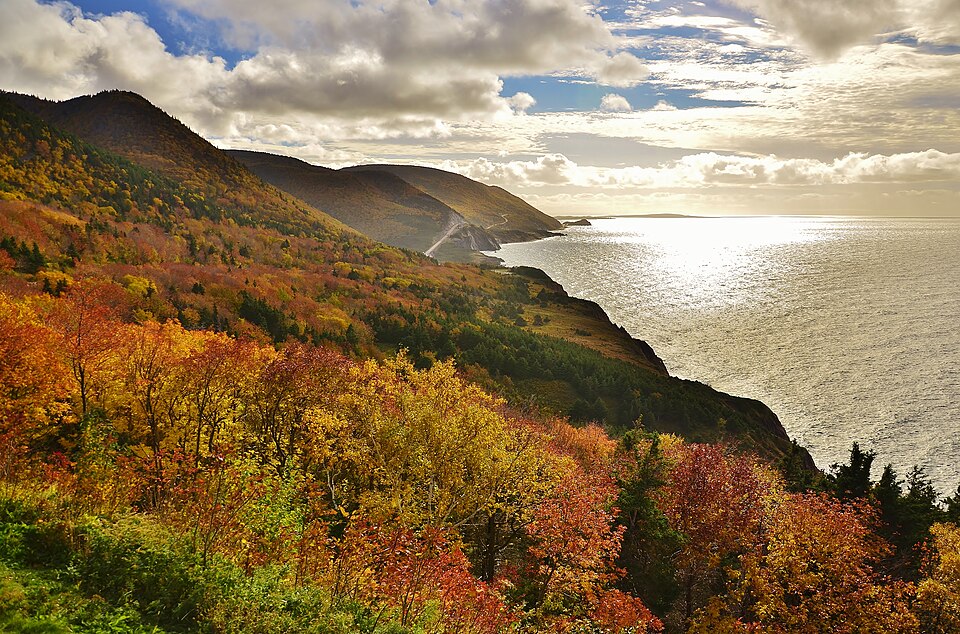
Route 19 runs up Cape Breton's west coast from the Canso Causeway to Margaree, with the Gulf of St. Lawrence on one side and green hills on the other. Officially it's the Ceilidh Trail. Unofficially it is one of the most musical stretches of road in North America.
That's not just marketing. This stretch of road has produced, from a population of a few thousand, an implausible number of the world's great traditional fiddlers — Buddy MacMaster from Judique, Natalie MacMaster from Troy, Ashley MacIsaac from Creignish, the Rankin Family from Mabou, and generations of Beatons, MacDonalds, MacEacherns and Chisholms whose names are known to fiddle players in Glasgow and Boston and Tokyo.
And the thing that makes it worth a family day out isn't the heritage plaque version. It's that on a Tuesday evening in July, in a hall or a pub or a firehall, someone will be playing, someone else will be dancing, nobody will be charging much, and your children will be welcome.
Why so many fiddlers, in this exact place?
The Highland Scots who settled Inverness County from the 1790s brought their tunes with them. So far, so ordinary. Here's what made Cape Breton different.
In Scotland, the fiddle tradition changed — softened by concert-hall arrangements, disrupted by cultural upheaval, and in places actively discouraged. In Cape Breton, cut off in rural Gaelic-speaking communities, the tunes just kept going, played the way they had always been played: driving, heavily ornamented, with a hard rhythmic pulse designed to make people dance rather than to make people listen politely.
The result is one of the strangest cultural inversions in music. Some Scottish musicians now travel to Cape Breton to learn playing styles that Scotland lost. The tradition emigrated, and it turned out that leaving preserved it.
Two elements are essential and both are visible to children immediately:
The piano. Cape Breton piano accompaniment isn't chords in the background — it's a rhythmic partner, driving and improvising underneath the fiddle. Watch the pianist's left hand.
The feet. Fiddlers here keep time with their feet, hard, on a wooden floor. It's percussion. It's why the music sounds like it's leaning forward.
And underneath both: step dancing, close to the floor, precise, and completely unlike the high-kicking Irish dancing most people picture. In Cape Breton, someone's grandmother will step dance at a kitchen party and everyone will act like this is normal, because it is.
Where to actually hear it
The Red Shoe Pub, Mabou. Long associated with the Rankin family and listing its 20th season in 2026, the Red Shoe is the Ceilidh Trail's living room: live music through the season, fiddle and piano sessions, step dancing breaking out beside the tables, and home cooking. In 2026 it ran suppertime tunes from 5 to 7pm Monday to Wednesday (no cover), live music on Friday evenings and Sunday matinées (a $12 cover), and no-cover Saturday shows. It's a pub, but it's a Cape Breton pub, food-led and a good fit for families in the earlier part of the evening. Go early with children and take a table. Seasons and schedules change every year, so check before you go.
The Celtic Music Interpretive Centre, Judique. This is the one families underestimate. It's a proper little museum and archive of the tradition, and in season it runs daily lunchtime ceilidhs (from 11:30, with lunch specials and no cover Monday to Friday), a Sunday afternoon ceilidh that runs year-round, and short beginner lessons in fiddle, step dance, piano and Gaelic over the summer. About 25 minutes south of Mabou on Route 19.
West Mabou Hall. On Saturday nights in the summer season, the community hall at West Mabou holds a square dance from about 9pm to midnight (roughly $12 to $15, children 12 and under free; check current prices), and this is the real, unvarnished thing: a hall, a fiddler, a piano, and three generations on the floor at once. Nobody expects you to know the figures. Somebody will grab your hand and put you in the right place. Sets run about half an hour and are genuinely aerobic. Bring cash, bring water, and let the kids watch the first set before joining the second. It's a late night, so it suits older children best.
Glenora Distillery, Glenville. Between Mabou and Inverness, Glenora describes itself as North America's first single malt whisky distillery and makes Glen Breton. Tours run daily from mid-May to late October, and the grounds have free ceilidhs in season. Parents get a dram on the tour; kids get the music and a brook to throw stones into.
Village halls and firehalls everywhere. Check what's on locally when you arrive. Half the best music on this coast happens in buildings with a bingo licence.
Inverness: the beach, the boardwalk, and the coal town underneath
Twenty minutes north of Mabou, Inverness has one of the best town beaches on the island: a long, broad crescent of sand on the Gulf, with a wooden boardwalk running the length of it. Gulf water is meaningfully warmer than the Atlantic side, the sand is soft, and there's parking, a canteen and space to spread out. On a hot August afternoon this is where you should be.
What almost nobody realizes walking that boardwalk is that they're on top of a coal town. Inverness was a coal-mining community from the 1890s until the mines closed in the 1950s. The Inverness Miners Museum, in the old railway station, tells that story.
The Celtic Shores Coastal Trail — a walking and cycling route of roughly 90 km from Port Hastings to Inverness — runs along the old railbed, which means it is flat, wide and beautifully suited to families with bikes. You can pick up a section anywhere along the coast and ride a few kilometres beside the sea.
Cabot Cape Breton, the links golf resort just above the beach, has put Inverness on the world golf map; see our golf stays guide. If golf isn't your thing, the coastline around it is worth a look.
Mabou beyond the pub
Cape Mabou Highlands. A network of hiking trails over the headlands north of the village, with big sea views and some genuinely rugged sections. The shorter loops suit families; check trail status locally, as sections close periodically.
West Mabou Beach Provincial Park. Quieter than Inverness, with dunes, a lagoon and a river mouth — good for younger children and rock-pooling.
Mabou Coal Mines. Not a mine you can visit, but a spectacularly pretty road out to a shoreline of red cliffs and abandoned farmland. Worth the drive for the view alone.
How to behave at a square dance (a short, useful guide)
Because this is the single most rewarding thing on the Ceilidh Trail and most visitors are too shy to try.
- Just go. Dances are advertised on posters in shop windows and on community Facebook pages. They're cheap, usually cash only.
- You don't need to know anything. The figures are called or simply learned by being pushed into position. Everyone was new once.
- Children are welcome and will be included. You'll see eight-year-olds and eighty-year-olds in the same set.
- Don't clap on the beat if you can't find it. Cape Breton time signatures move; nobody minds if you just tap your foot.
- Thank the musicians. They're often playing for very little.
- Water and cash. Halls are hot and card machines are optimistic.
Practical planning
Getting there from Baddeck: Mabou is about 1 hour via Highway 105 and Route 19; Inverness about 1 hour 15. The drive along the Ceilidh Trail with the Gulf on your left is one of the great underrated Cape Breton drives.
Best plan for a family: beach at Inverness in the afternoon, early dinner and music at the Red Shoe in Mabou, home by about 9:30. Or, if you're feeling it, stay for the West Mabou square dance on a Saturday and let the children see something they'll remember for thirty years.
When to go: the music season runs roughly late June to mid-October. Celtic Colours, 8–16 October 2027, puts concerts into halls across the island (the 2027 venues weren't announced when we wrote this), and October on the Ceilidh Trail, with colour on the hills and music in the halls, is hard to beat.
Cash: carry some. Halls, door charges and small venues often don't take cards.
Check listings on arrival. Schedules shift weekly. The Celtic Music Interpretive Centre in Judique and local Facebook community pages are the most reliable sources.
Keep exploring: Gaelic, Mi’kmaw and Acadian culture · Highland Village and Iona · Golf stays in Baddeck · Celtic Colours stays
Frequently asked questions
What is the Ceilidh Trail?
Route 19 along Cape Breton's western shore, from the Canso Causeway to Margaree, running through Judique, Port Hood, Mabou and Inverness. It's named for the concentration of traditional Cape Breton music along it.
What is a ceilidh?
Pronounced KAY-lee, it's a Gaelic word for a social gathering with music, dancing and storytelling. In Cape Breton it usually means an informal concert in a hall, pub or community centre.
Can children go to Cape Breton square dances and pub ceilidhs?
Yes. Community square dances are all-ages family events, and pubs like the Red Shoe are food-led and welcome families in the earlier part of the evening. Bring cash and go early.
Where can you learn to play a Cape Breton tune?
The Celtic Music Interpretive Centre in Judique runs daily ceilidhs in season and short beginner lessons in fiddle, step dance, piano and Gaelic over the summer, suitable for complete beginners including children.
Is there a beach in Inverness, Cape Breton?
Yes — a long sandy Gulf beach with a wooden boardwalk, warmer water than the Atlantic side, parking and a canteen. It's one of the best town beaches on the island.
What is Glen Breton whisky?
The single malt made at Glenora Distillery in Glenville, between Mabou and Inverness, billed as North America's first single malt whisky distillery. The site runs daily tours in season and has free ceilidhs.
How far is Mabou from Baddeck?
About 1 hour by car.